
Hello…welcome to the next human created offering here at humanaturescapes. As all of the articles shared thus far, this one too has been created without the use of AI – written, read, re-read and tweaked by a person. Yes, it was written on a digital laptop (a tool), yet the creativity, ideas and mind meanderings behind it are all human. Why am I emphasising this? Certainly, it has been a hot topic of debate recently, across media platforms.
However, it all seems to be part of a concept that I have noticed across a number of areas in my life, which may in fact connect to the personal, professional, social, emotional, physical and even spiritual challenges of our time – we have lost our proverbial ‘village’.
While human relationships – and humans – are complex, I think we need to embrace that “life is complicated” and move forwards. (Note: A lot of the divisiveness of today’s social challenges appear to be connected to a deep desire to escape this complexity and have things be black OR white, which is simply unrealistic – very little, if anything in life is truly binary.)
What all of this is alluding to, is that by embracing the complexity of humans and our relationships to each other, we are also embracing joy, laughter, creativity, love, comfort, support and care +. Think of a festive table of shared food and drink and the human touch that not only prepared the feast, but also decorated the space and considered the companionship of the people gathering there – that is what makes the moment special. The conversation, companionship and feeling of belonging that this invokes…is human connection.
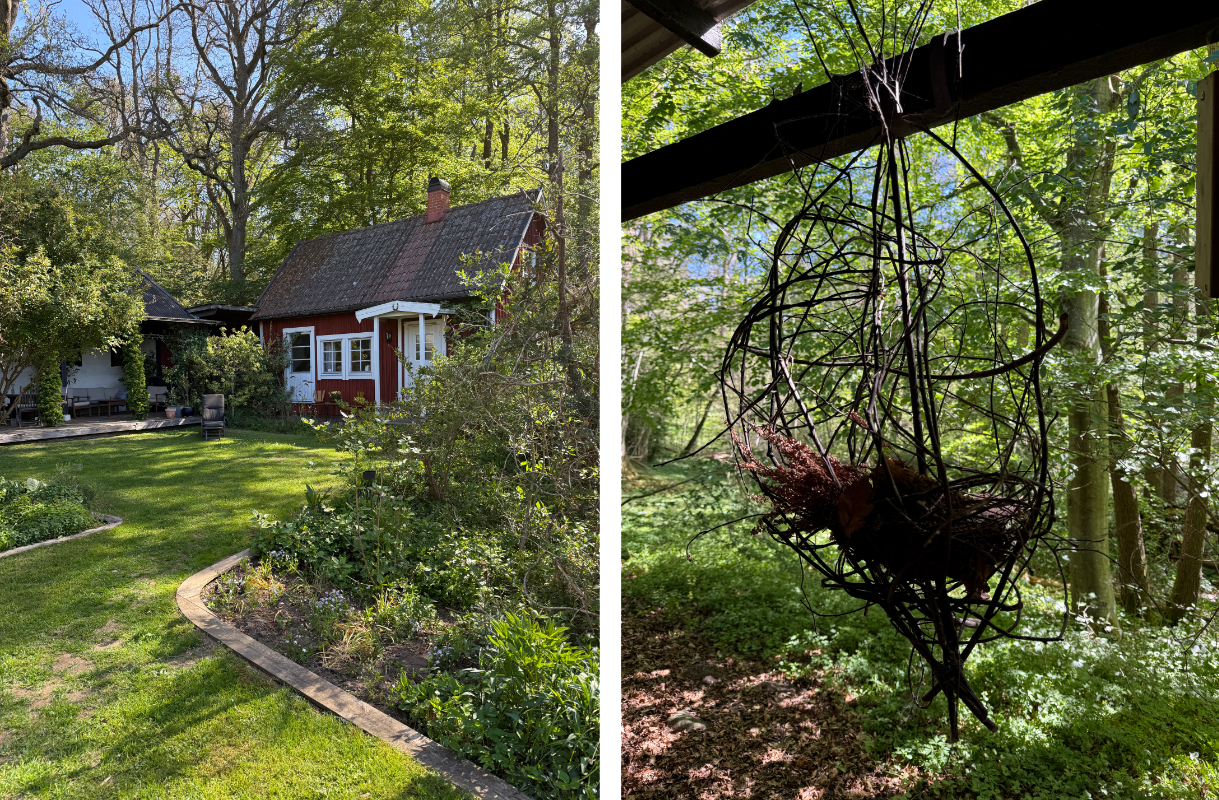
This topic came to mind on several occasions this year, particularly when I was visiting therapeutic places of care in Europe. Here the feeling of “hygge” (Danish) or “gemütlichkeit” (German) were really evident, yet also a touch intangible, as is often the case when describing an atmosphere. It is perhaps a more emotional response to a place, one that I certainly felt while standing in the protected green courtyard of Anders Folkesson’s (Sövröds Hage) home and the site of Nature-assisted Rehabilitation. And it was here that I specifically questioned what it was that made me respond so…
…it was the evidence of a human touch, a human presence…and with it, signs of care and creativity. Something that is, and will remain, distinctly human (not artificial).
Yet standing in southern Sweden – feeling enveloped and embraced by the forest and local greenery, comforted by the vernacular Swedish architecture (and in the company of lovely people) – it wasn’t the twig-mobile, or the decorative cushion, or the natural materiality specifically that gave the place ‘hygge’. It was ALL of those things, the time invested by a person to make the hanging sculpture, the evidence of their hand and analogue methods to construct with imagination and then suspend it within view of the nurturing forest. ALL of those things combined, demonstrating a relationship between the person and their surroundings created those signs of care.
Hygge (Danish): a cosy contented mood evoked by comfort and conviviality – taking time away from the rush of daily life to be together with people you care about.
These expressions of care, creativity and relationship are personal or even quite intimate, which imbues them with meaning (for both the maker and the receiver/viewer). It is a small expression of life, something special and yet also in a way, very ordinary – made by human hands, relating to craft, traditions and even rituals (a further aspect lost from the Village by our constant chasing of individualism instead of community). While today children gain a ‘participation award’ at every turn, there is a much deeper meaning in rites of human passage and life, rituals of ceremony that celebrate belonging to a greater system and community (a Village even?). And as I found when looking into First Nation world views for RESTORE, that includes our responsibility to each other.
The care, time and creativity that goes into crafting and making something, particularly the distinct irregularity and analogue imperfection (uniqueness) of a hand-made item, cannot be replaced by digital or artificial production methods. The Japanese art of kintsugi / kintsukuroi (pottery repair with gold, silver or platinum) or even their philosophy of wabi-sabi (embracing imperfection) have a similar value at their heart, that of respecting flaws as part of the beauty of life and the history of an object. This actually goes beyond the initial creativity of making something, as it responds to unintended expressions of a life within an object. Again, it represents a relationship, with a person (maker/giver/receiver/viewer) and a subject (object) of daily life.
In reflecting on this, I return to the analogy of the shared and decorated table for a festive meal, something that was very much a thing of my childhood in Germany. Festive decorations are taken ‘seriously’ there, including making your own decorations and gifts for many occasions – giving not only a material object to others, but adding a touch of personal creativity to it as an expression of care. And while I am not naïve enough to ignore the comparative or competitive aspect of this, I don’t recall all houses having a similar look like the magazine-styling we find in many houses today. These decorations demonstrated the owner’s favourite colours, animals/pets, sense of humour and general aesthetic and they were shared in a generous and fun way with loved ones. They were indeed ‘signs of care’ for those that lived in, or had been invited into that Home.
This concept clearly returns to a couple of topics previously written about, particularly ‘signs of care’ and the idea that time goes beyond being understood as a measure of money. Or rather, that the personal touch, the creativity and the physical making of something took an investment of time – and this investment was given to an activity of personal meaning-making or a gesture of care, for example. When monetary value is taken out of the equation, and the complexity of personal meaning and expression takes its place, I believe we have true value through signs of care and personal relationships.
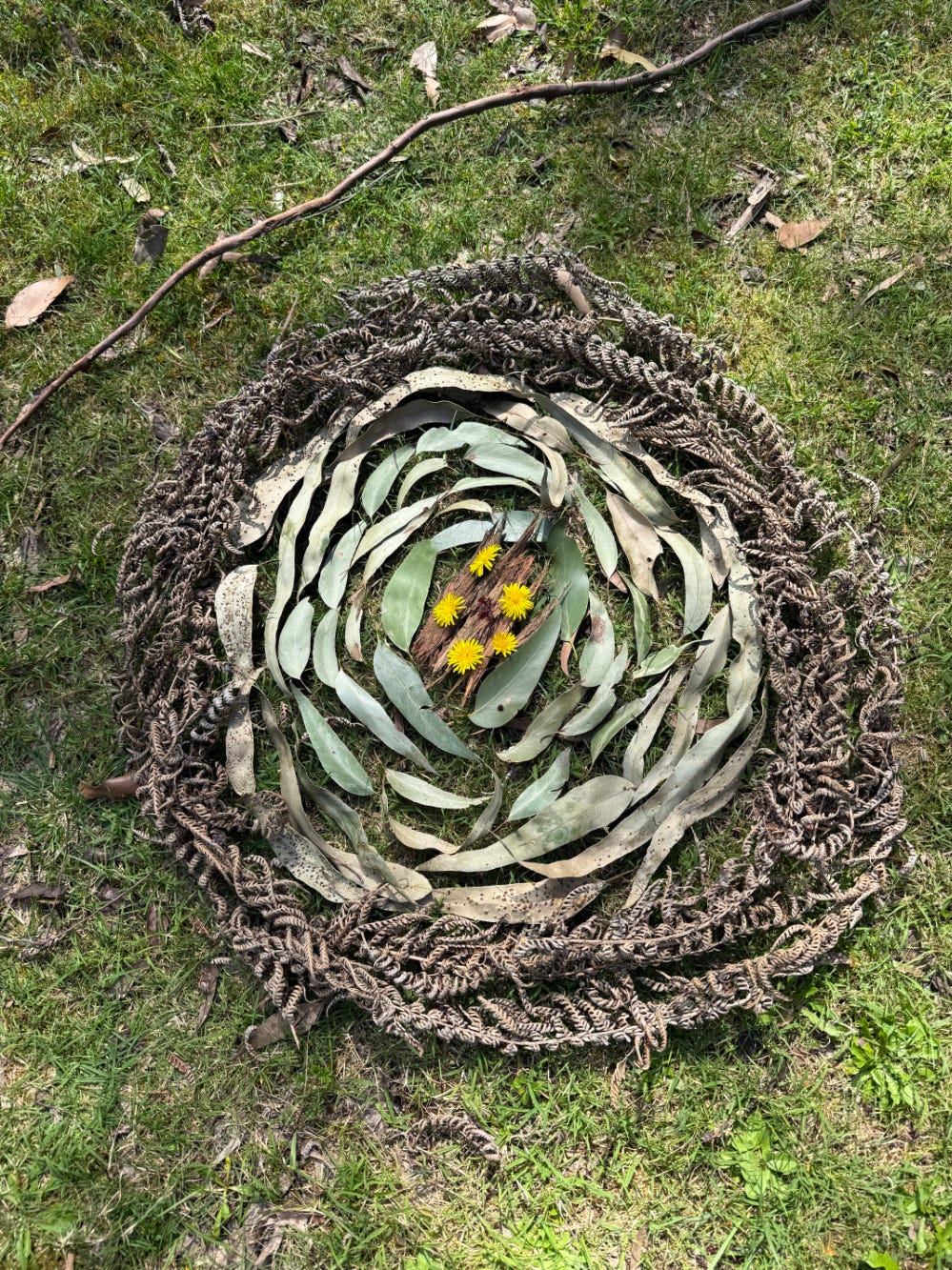
THAT is the comfort to be found in the presence of a human touch. Perhaps we recognise ourselves or our kin in such gestures? Comfort is also present in the physical act of a human touch, being that we are one of many “affiliate primates” on this planet. While the imperative value of skin-to-skin touch for newborns is quite well known, studies from the 2010’s showed that the ‘brain quiets in response to stress when a person’s hand is held’ – particularly when that is done by a loved one. Our communal and social core may well have originated from an increased chance of survival, yet regardless of the reasons, we cannot deny our need for ‘each other’. We “…are hardwired to ensure we form, maintain, and grow our affiliative ties. Being part of social groups is indeed part of who we are…”[1]
On a slightly different tangent, after attending a presentation of the ‘Art of Pleating’ as part of Melbourne Fashion Week, the quality of craft and an artisanal element to the hand-made was highlighted again. Speakers noted our human need and interest in finding out ‘who made it’ and ‘how’, which very much reflects what I have found within spatial design, as much as in the crafting of objects.
It was also interesting to listen to the panel discuss the unnecessary binary that often comes from a focus on the hand-made: that of analogue versus digital technology. The art and craftmanship of the hand-made and human creativity is not exclusive of digital tools – what is non-negotiable is that the digital remains a TOOL that serves human creativity, rather than replacing it. This is where I felt panelist Dr Alice Payne (RMIT) summed it up perfectly by noting that the defining factor was the ‘spirit of the approach’ and the intention to create rather than merely produce – it is the human storytelling of creativity.
Witnessing the beauty, artisanal skill and rare knowledge that went with textile pleating made me look up the meaning of ‘artisanal’, which again seems to sum up why there is comfort in a human touch: “made by hand and very special”. Now whether every creation discussed within the green spaces I have experienced was a work of art remains in the eye of the beholder, but they certainly were ‘made by hand and very special’. It is an object or place that demonstrates the spirit of approach, the care taken for creation, the time invested to make it and often the values of the person who crafted it. These are all signs of a human touch, which reflect our personal relationships and meaningful interactions with each other – connection to a Village / Community.
May we all contribute to and nurture the Village of which we are part – every complex day.
[1] Sakman, E. (2019) Humans as Social Primates. IN Encyclopedia of Evolutionary Psychological Science, Springer.