
Supportive Spaces
– how spaces can hold, strengthen and bolster us
Supportive Environments – this was a key term and concept acknowledged in Part 1 of RESTORE, stemming in that context from the work of Swedish Academic Patrik Grahn (1991). I have since considered this term and its importance, as spaces and the environment around us support and foster our human wellbeing. The concept has importance not only in the sense of a place offering physical, mental and emotional support of users, but also in confirming that spaces (planted places in particular) can indeed play in integral role in rehabilitation and recovery processes.
As this idea has consistently popped its face into my ponderings, I decided to try to understand some of the theoretical frameworks or specific details of the original concept further. And what I have found has been really interesting…in fact, it has made me consider my interpretations in a new way: as Supportive Spaces.
Yes, I recognise this may seem a very minor difference in wording, but let me share what I found and why the words have shifted in my understanding.
In a number of academic writings, “supportive environments” are discussed as including broad and somewhat intangible environments, such as work places, cities, schools and more. They are spaces in which we live, learn, work and generally spend a decent amount of time. In many articles what is meant by supportive environments are ‘third places’ - sociologically speaking, places in which we do not work or live, though work is indeed included in much of the research looked at here. Supportive Environments also often seemed to focus on how certain structural or social systems can be adapted to ensure we feel comfortable, accepted and ‘supported’ when being within them.
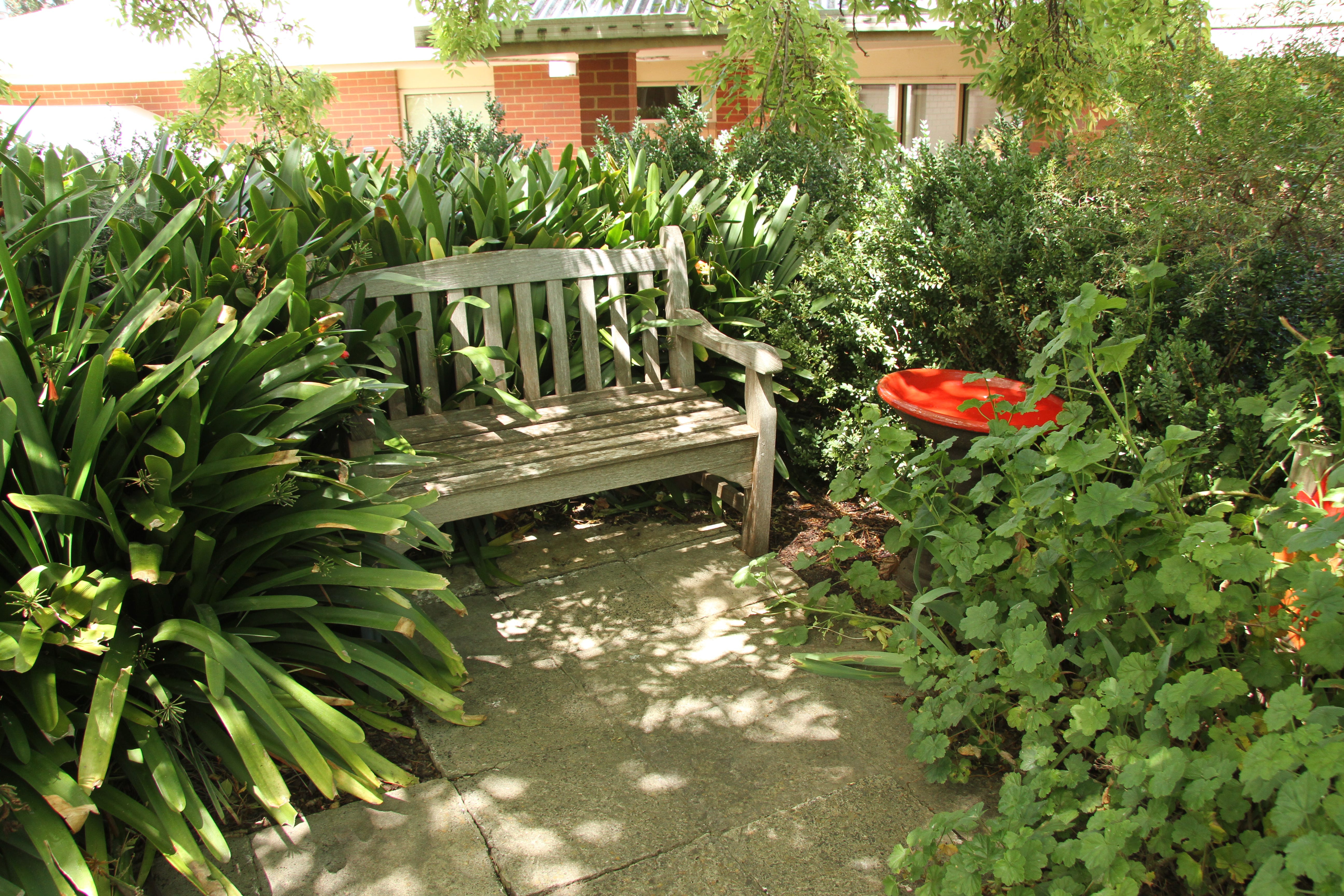
In this way, I would say that these supportive environments are discussed in a way that interprets them as more of an “atmosphere” – a vibe even – and certainly one that pertains to how we perceive or feel within the spaces. By supporting social connections, inclusivity, cohesion, integration and such qualities, these environments are indeed supporting the individuals who use them. At times researchers also referenced adaptations or physical interventions to make environments more supportive (such as in Aged Care); but it seemed more often to be system type structures that created procedural support and behavioural expectations. This concept was in a number of articles related to health promotion.
This meaning appears to be generally what the Sundsvall Statement expressed, accompanying the Third International Conference on Health Promotion: Supportive Environments for Health of 1991 - the same year that Grahn first discussed the term in his work.
“For good health, people need an environment that is viable, an economy that generates enough resources to enable them to be healthy, and a community that is convivial.” (p. 14)
“In a health context the term supportive environments refers to both the physical and the social aspects of our surroundings. It encompasses where people live, their local community, their home, where they work and play. It also embraces the framework which determines access to resources for living, and opportunities for empowerment. Thus action to create supportive environments has many dimensions: physical, social, spiritual, economic and political.” (p. 38)
In contrast, what I believe Grahn and colleagues were meaning within their work was a more practical and physical interpretation, which certainly grew as Grahn collaborated with Danish Landscape Architect and Researcher Ulrika Stigsdotter in the early 2000’s. They compiled qualities to define such an environment, especially in a vegetated public setting. Thus, as Grahn and Stigsdotter’s concept was where my own understanding began, I adopted the term in this more physical, tangible sense. I also interpreted the concept at a practical and applicable level, considering how aspects of a space may provide said ‘support’.
When examining the broader, almost conceptual and community level of the more common interpretation of “supportive environments” above, set against the more palpable and spatial version, it made sense to alter the wording:
Supportive Spaces / Places.
So, what can this support look like? Elements and qualities discussed in RESTORE provided just some of the evidence for the calming effects of the colour green and visual fractal patterns most often found in nature; the reduction in heart rate and cortisol (stress hormone) production through the visual and other sensual experiences of natural spaces; the improvement of the immune system by breathing in phytoncides (oils emitted from trees that boost our natural-killer-cells) or from beneficial bacteria as we connect physically with the earth; or the distraction and ‘soft fascination’ provided by natural features, materials and habitats. All of these things make natural landscapes ‘supportive’ in that they ask nothing of us, they don’t disagree or argue and just allow you to ‘be’. (This obviously does not include activities of gardening or such at this stage, just being within the spaces.)
Through the use of natural materials underfoot we slow down, by providing habitat we entice wildlife into the place to notice and be observed, we zoom-in from the pressures of the ‘global scale’ to a more domestic and human one. All of this offers a landscape or place that is calming, relaxing and of a domestic scale, which is more familiar to us than many urban spaces.
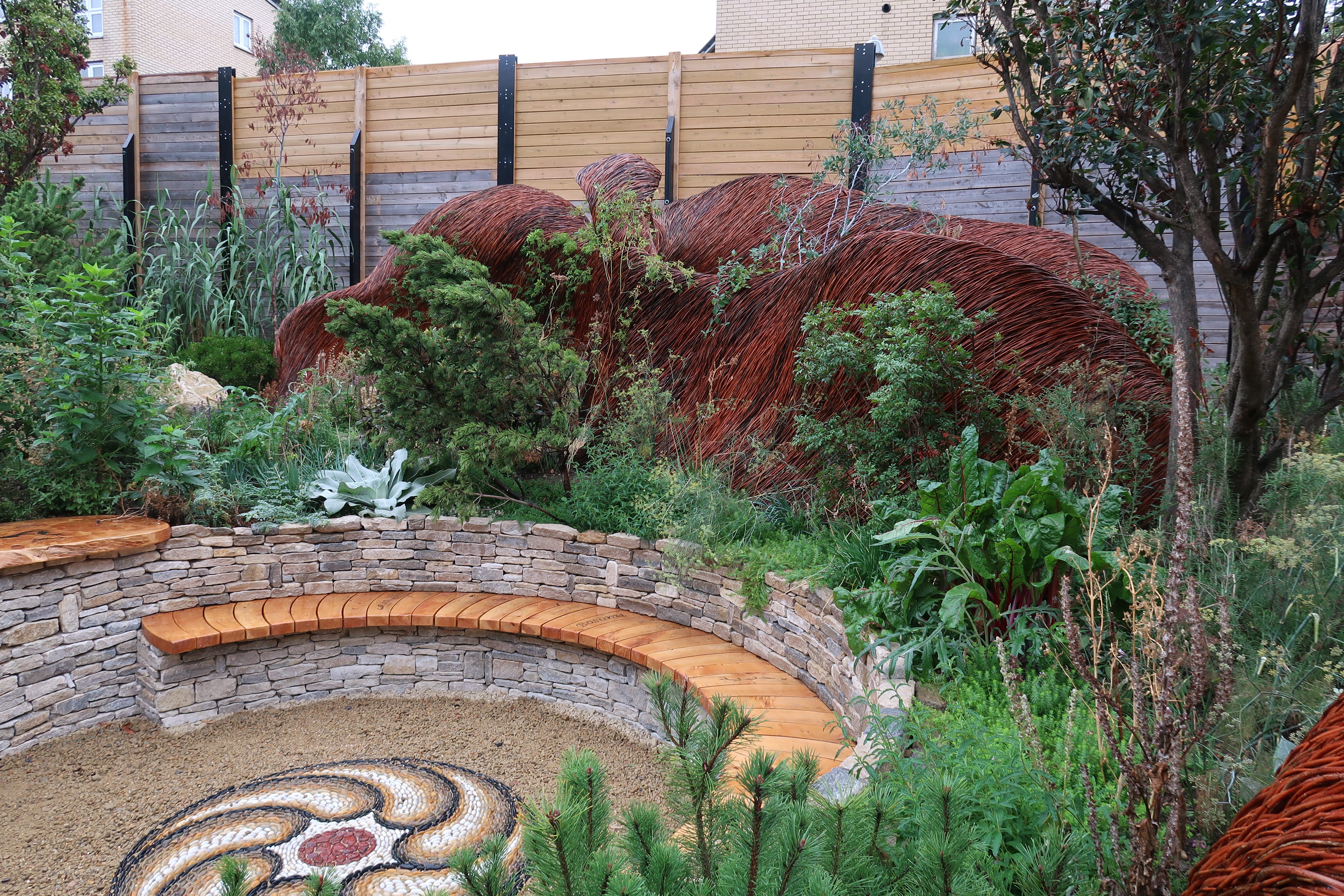
These qualities then also provide opportunities to slow down enough to engage with each other, to talk, to stop, to breathe, to listen! As seen in the research of Danish architect Jan Gehl and his colleagues, moving on foot instead of within a machine slows us down enough to ‘have time’ to greet another person or at least gesturally engage with them due to the pace of movement. This slowed pace also offers ‘time’ to notice life in our periphery, instead of rushing past.
And it is through this slowing down to human pace, that supportive spaces provide greater (even incidental) opportunities to engage with the world around us. Observing the changes of the seasons, the activities of our more-than-human kin, the progression of daylight, the fluctuations in weather. Perhaps it is most importantly this chance to slow down and engage with our living surroundings that offers the greatest level of support within any planted place.
By being places of natural cycles, uncontrolled by humans, but rather beating to a different (non-human-controlled) drum, we recognise that we are part of a greater system. This is starting to sound very romantic and idealised, but from the research I have undertaken thus far, it seems to me to be a major influence for the benefits and support offered by planted places.
*If there are examples of how certain places have been a “Supportive Space” for you dear reader, I would be really keen to hear any stories and experiences you would be willing to share – Thank you in advance.