
After last month’s article around hope and challenge, I quickly nose-dived back into the overwhelm of my new “mycelial-stealth” approach and the trials that will come with it – turns out I simply need to ensure I walk everyday (in Nature of some sort, even the suburban kind). Thankfully, after realising this, I returned to a more hopeful outlook of ‘one step at a time’ (phew!). Thus…I decided this month to return to a focus on the simplicity of gardening, some of the core reasons it is so helpful and supportive, and what makes it so nourishing (and addictive – at least for me).
Without going on yet another rant about the state of the world, I have recently been reflecting on the value and richness of having grown up to WAIT for rewards (like a Christmas or Birthday present as a child). Being taught to be patient about the moment of ‘reward’, to hold onto the thrill of anticipation for the object / experience of desire, has had a lasting effect. One that is now achieved through self-discipline and a profounder understanding of the joy, fun and deeper sense of satisfaction that comes with the anticipation period.
Yes, there is real pleasure in planning a trip or project, in saving up for something of greater investment or looking forward to a date for a special meeting. Perhaps it heightens the importance that these experiences have in our lives, saving them as ‘special occasions’ rather than taking for granted that we can buy whatever we wish at any given time. I have also had conversations recently with my parents about the challenge, when it comes to times of present giving, of our friends and family having the means to buy all they ‘need’ in life. What do you give someone who essentially ‘has it all’?
I recognise this is a position of great privilege and that there are certainly people across the world for whom this is not the case. Yet a growing middle class across the world means the number of people who have had their base needs met is growing, despite the current financial, mental and emotional challenges of the failing state of extractive capitalism. It should go without saying that what I mean here is not the anticipation of the next meal, but a situation where all human needs (food, shelter, safety…) have already been met.
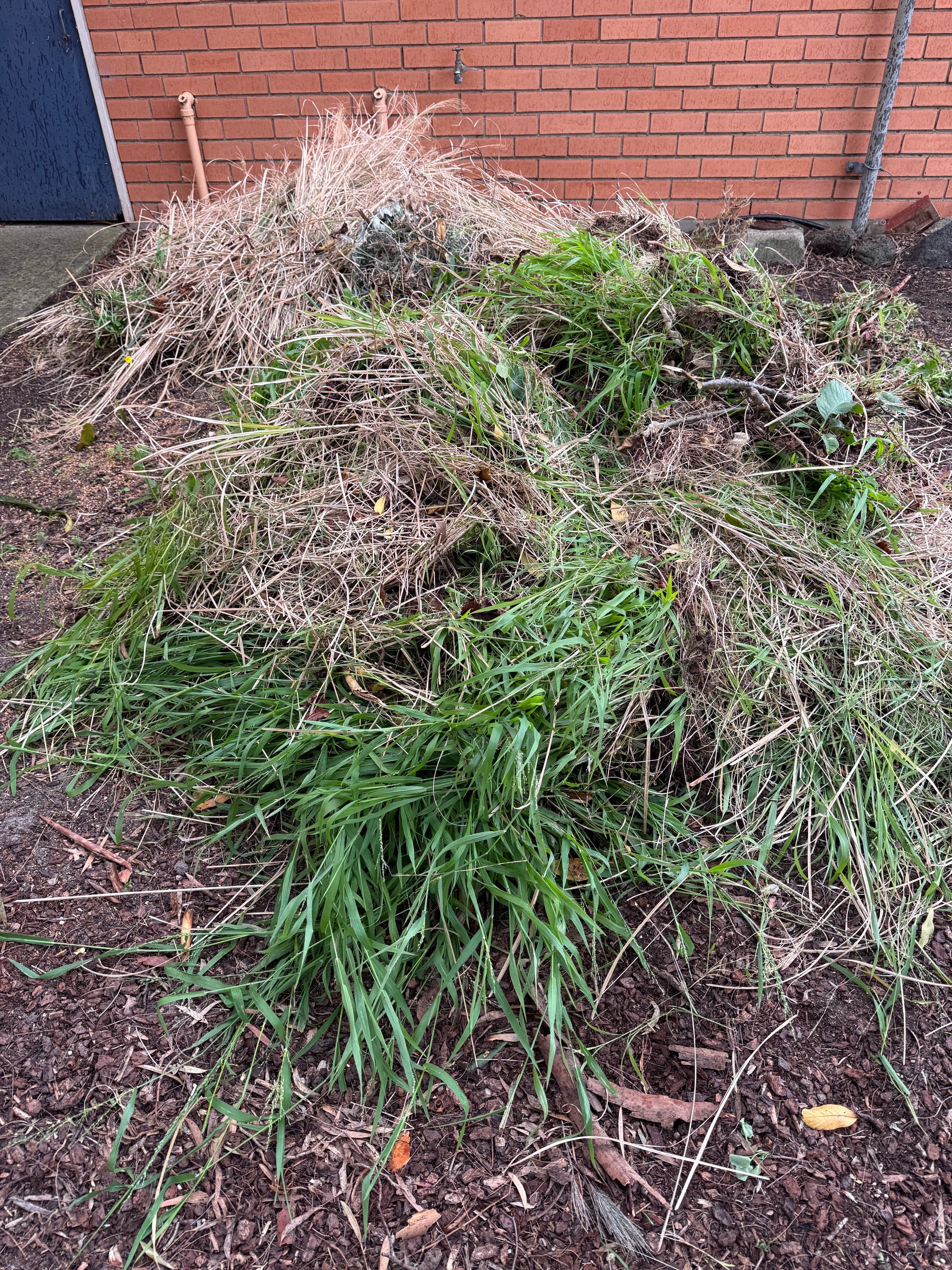
So, in a world of instant gratification and diminishing attention spans, what can fill that gap when we are not on the ubiquitous screens that dominate our world? Weeding! That is one thing that certainly does it for me, experienced less as a chore (though it can also be that of course) and more of a sense of satisfaction and achievement (fairly instantly). I have found this time and again when crawling on my hands and knees at the Royal Talbot Rehabilitation Centre garden, pulling the grasses that are determined to grow amongst other plants and less noticeable areas of the garden.
Ahhh, the satisfaction of a pile of weedy grasses, having been plucked relatively quickly and creating a new area of ‘clean’ soil for other plants to spread out.
I recently recognised it on social media as a subtractive method of gardening (taking away biomass), rather than the usual additive method of propagation and planting, which seems to be more popular for social sharing. A bit more exciting and meaningful for sure, but the additive is connected to much more patience than the subtractive, which is often immediately gratifying.
The longer anticipation of a seed turning into cotyledons, of seedlings growing into plants, of plants transforming into a garden, are all hugely rewarding – yet they demand patience. They must be done in ‘garden time’ and cannot be rushed or pushed into productivity. We must wait, patient in our joy of anticipation or the potential of the results of our efforts – also with no guarantee of success! That is a further factor, which may not be so joyful, yet certainly builds on our resilience as participants of Nature and the growing process of Life.
Therefore, not only do Gardens and the act of gardening enhance an engagement with the systems and cycles of life – teaching us patience and the joy of anticipation – they build our resilience to respond to challenges, lesser successes and learning. Not every seedling we nurture will make it into a fully grown plant, not every plant we care for will survive its full life cycle, not every seed will sprout. And yet, we continue to care, nurture and sow, because that is what Mother Nature teaches us. It is as many people say, a gesture of hope for the future – it is the potential we cling to.
I wonder also if the time and energy invested over the longer term is what gives these results an inherent greater value? Not only have we invested of ourselves in the act of gardening (both subtractive and additive), but we have actively nurtured another life-form, persisted over a period of time with patience and care – all of this makes the results hold greater value for us, we are more personally invested!
It is perhaps also some of the reciprocity of which Potawatomi botanist and author Robin Wall Kimmerer speaks in her book “Braiding Sweetgrass” (2013). And what has perhaps given her the strength and resilience to lean into a new venture of resistance called “Plant Baby Plant” (plantbabyplant.com), a call to action and means of connection for gardeners, nature lovers and earth stewards across the world.
Reciprocity is like the antithesis of extractive capitalism, engaging with the natural world in a manner that is balanced and based on mutual support to create and maintain a sustainable future for all parties involved within the greater system (our environment). It includes small considerations, such as never taking the first or last of a foraged planting, never taking more than you truly need (and not more than half) and giving back immediately through nurturing or nourishing the site from where you have taken. It is a way of paying it forward, as well as back at the same time.
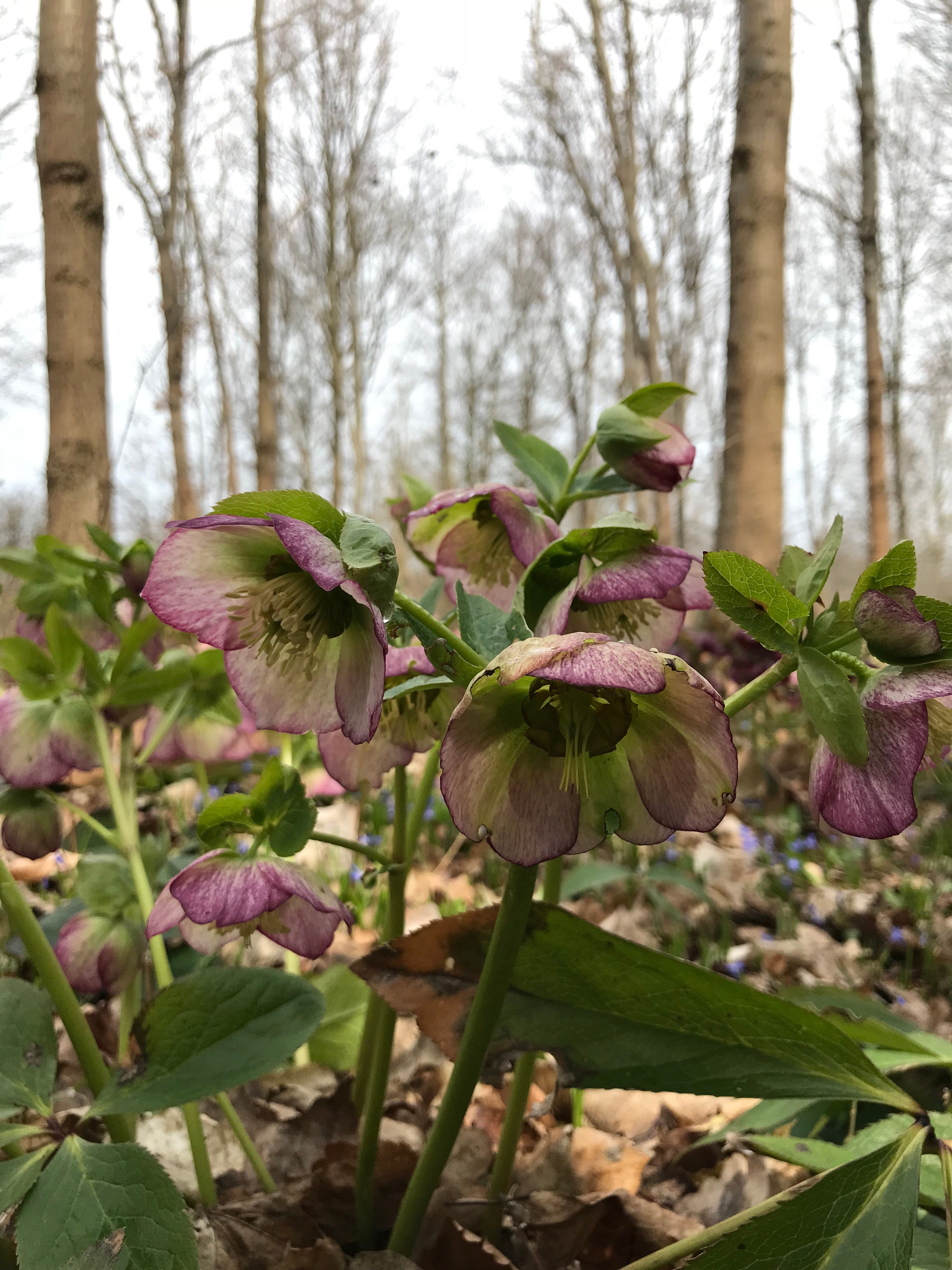
Reciprocity in a larger sense – certainly within the research and work I have been undertaking – would also seem to be about consciously recognising the many benefits, gifts and wellbeing we are given by Nature when we spend time with her. The sense of calm, the proven reduction of our cortisol (stress) levels, the slowing down of our breath and heartbeats. Understanding and fully appreciating that the oxygen a tree exhales keeps us alive, while their metabolism of our exhalations helps keep the atmosphere in check, for us all to thrive.
Giving true and deep value to the street tree in front of my house, that offers shade and pleasure through its colourful bark patterns is another form of reciprocity – especially when it comes to protecting that tree and ensuring that it remains in my neighbourhood. Being an advocate for Nature within our immediate environments, by showing councils and various levels of government that we demand it be part of our Community is a way of giving back – giving voice to living beings that don’t have a say or place ‘at the table’. This is how we can reciprocate and raise the awareness and importance of ‘green’ in our world.
At the same time, we may be doing our brains a favour, by not overdosing on dopamine hits of instant gratification and mindless entertainment. We can protect ourselves from becoming addicted to overstimulation and superficial reward, instead strengthening and elongating feelings of joy, curiosity and resilience by taking our time. Living in a stretched-out moment of potential, rather than a mere second of gratification, which fades all too quickly.
No matter how you express your own version of reciprocity – a good feed of worm-juice for a growing plant, finding the right spot for a habitat-enhancing shrub, planting a new tree to join the community or being a supportive, advocating voice for local Nature – go forth and prosper. Be patient, grow and enjoy your gardening!
Hi Sandra, Thank you for another thoughtful piece. Hope all is well for you.