
Be careful vs Pay attention
– separating fear from beneficial risk
The scope of children’s independent movement or space to ‘roam’ has drastically declined over the past half a century (some say by 90%), impacted by factors such as the increase of car-use, other technological developments and general societal shifts. One influencing factor, that may be a surprising to some, has also been the rise of the middle class.
Generations of the mid-1900s may have been relegated to play outside in order to maintain cleanliness of the ‘good parlour’ or to ‘keep out from under mother’s feet’, making the street the pseudo-backyard for kids and their young neighbours. As personal wealth increased, house sizes grew, alongside the increased ownership of cars now driving on said neighbourhood street.
Fast forward to today’s giant Australian houses (we now have the biggest in the world – not a title to wear with pride) set to the fence-line of smaller lots and focusing more on interior rooms than outdoor space. The rise of the middle class appears to have shifted family goals towards each child having their own room, each room having a TV and the overall footprints of houses being the priority. Purpose built ‘play rooms’ and the many accoutrements of childhood play, including the must-have trampoline that takes up the majority of many a tiny yard in Australia, all act as symbols of contemporary personal success.
If this sounds at all dismissive of parenting today, I apologise, as it’s not the intention, it is more an expression of sadness and a touch of pity, as today’s parents are constantly bombarded with vast levels of guilt and fear around their child rearing. It was a conversation with a young mother friend of mine, sharing her concerns and the pressures assailing her from all sides that made me reflect on this and my own childhood.
I was a kid who climbed everything (including onto the third storey roof of our German apartment building when I was about 4) and explored my Australian neighbourhood with my best friend throughout primary school. I hardly know a child who would walk independently to school around the corner today, let alone be allowed to climb a local tree and be expected to just be home for dinner. (And I’m not ‘that’ old, that this attitude should have altered so dramatically in this time!)
So, what more specifically has changed? My reflection on this has included an interrogation of language, having grown up speaking German. As an active kid (and climber, as said) I recall being often reminded by my parents to “Pay Attention”, or to watch what I was doing. What I often hear being told to children today is “Be Careful”, especially around playgrounds, where a parent or grandparent hovers nearby. Now, I understand that this difference of wording may seem minor, but as I contemplated the effect of the words, I realised that the connotation and intention behind them is quite different. Let me explain my thinking.

Be Careful has a connotation of danger, of there being something threatening in the world around us of which to be wary or even scared. It places the responsibility or risk within an activity outside of the person and asks them to raise their vigilance towards known and unknown threats. It has, what the authors of Kids these days – Understanding and Supporting Youth Mental Health (2025) may call the child being a ‘passenger’ (or in fact a ‘victim’ to a dangerous world).
Pay Attention places responsibility of risk more firmly in the hands of the person themselves, indicating that the risk comes from how the person chooses to behave within a context, rather than only the context itself being the cause/danger. It also acknowledges risk, but accountability lays with the person and not the ‘outside world’, recognising the relationship we all have with our surroundings. It also places the child (or risk-taking person) in the position of what Kids these days authors call ‘crew’ – active participants who weigh up potential consequences of their choices.
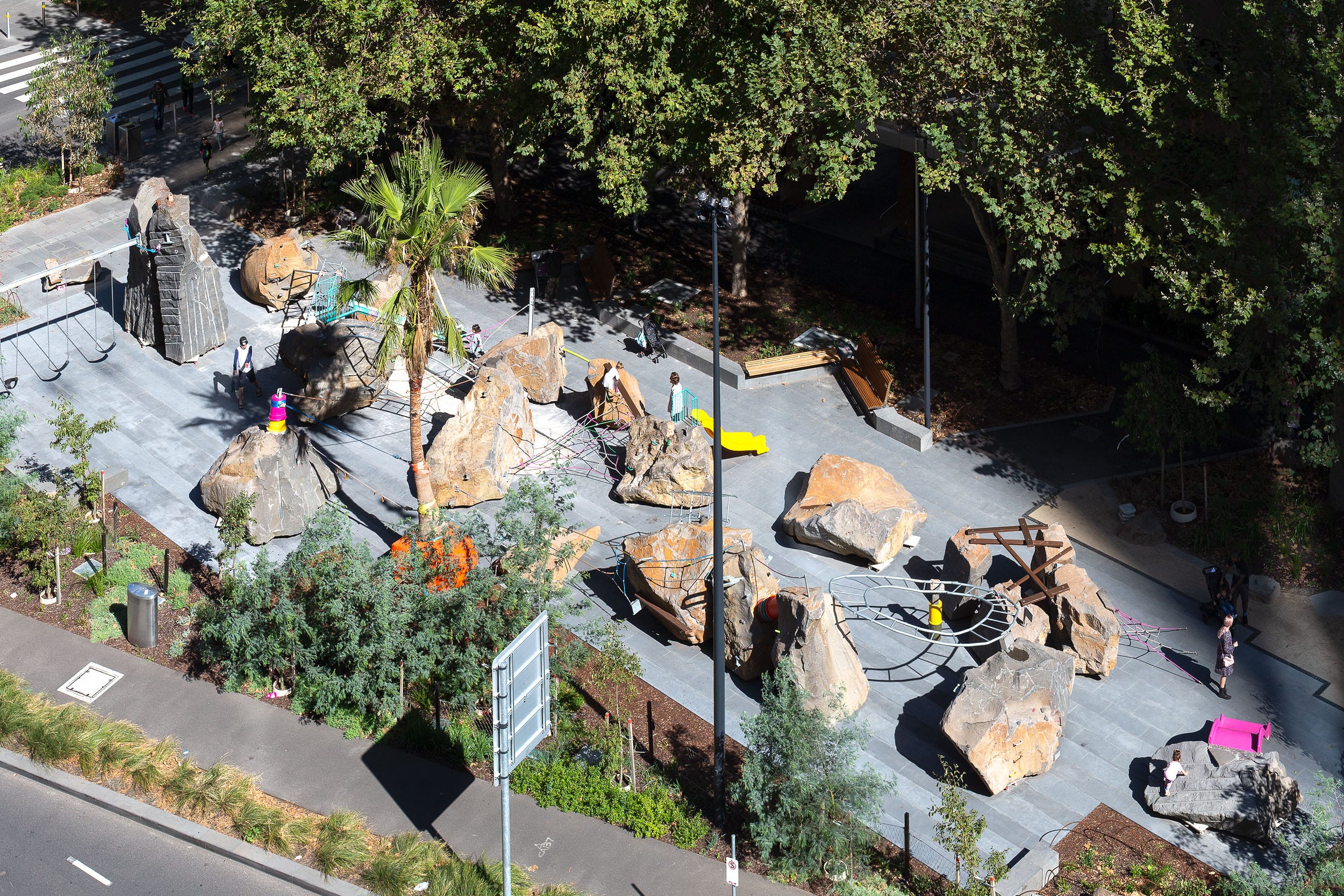
Understandably, there is no black and white here, within a world of 8 billion people, machines and infrastructure there is undoubtably an increased level of risk in local neighbourhoods. However, we have also removed ourselves from many daily interactions in this world, instead seeming to cling on to campaigns such a ‘Stranger Danger’ (originating in the USA) and wanting to remove all elements of risk from children’s lives – which is impossible.
A couple of interesting asides to this issue, is that certain stakeholders seem to be so influential that we do not question or restrict risks that inherently come with cars, nor hold media and statistics to account when they sensationalise the danger of strangers to our children. Living in urbanised, western countries I would suggest we and our children are in fact statistically more likely to be killed or injured by a car than any other threat, certainly in Australia. (Slow streets appear to have saved more lives than any other reduction of ‘risk’.)
Statistics on kidnappings and person-based danger to children has for some time remained vastly greater in relation to people the children know, than strangers. We are clearly being overwhelmed by fear, which is resulting in poor decision making regarding the freedoms of children and this overprotection is harming them.
As part of one of the first generations to change to a much more involved (and even helicopter) form of parenting, I am a little baffled as to what my peers were aiming to contrast. (Note: While I was a teacher for around 20 years, I own that I do not have my own children, these are perhaps more philosophical ponderings.) I don’t recall any of my friends and classmates discussing being unhappy with their childhoods, while often lamenting the reduced freedoms of their own children.
How have we allowed this to happen? Has it just been that bit ‘too hard’ to parent as our parents did? Was there really something to vastly improve? Or is this just another example of the scale of globalisation, information overload and constant judgement overwhelming us yet again?
I return to a source that I found hugely fascinating and practical in its approach during my studies of landscape and general urban planning concepts. No Fear - Growing up in a risk averse society (2007) by Tim Gill discusses the larger threats of removing risk from children’s lives. The huge benefits of learning from risk, learning from paying attention, are likely being diminished in contemporary childhood. It is such a vital tool for building resilience, interpersonal skills and self-confidence, especially when we are held responsible for our own actions and their potential effect on others. Difficult as it may be, we need to acknowledge that the developmental benefits of risks, far outweigh the actual potential dangers – making for a more satisfying and meaningful life.
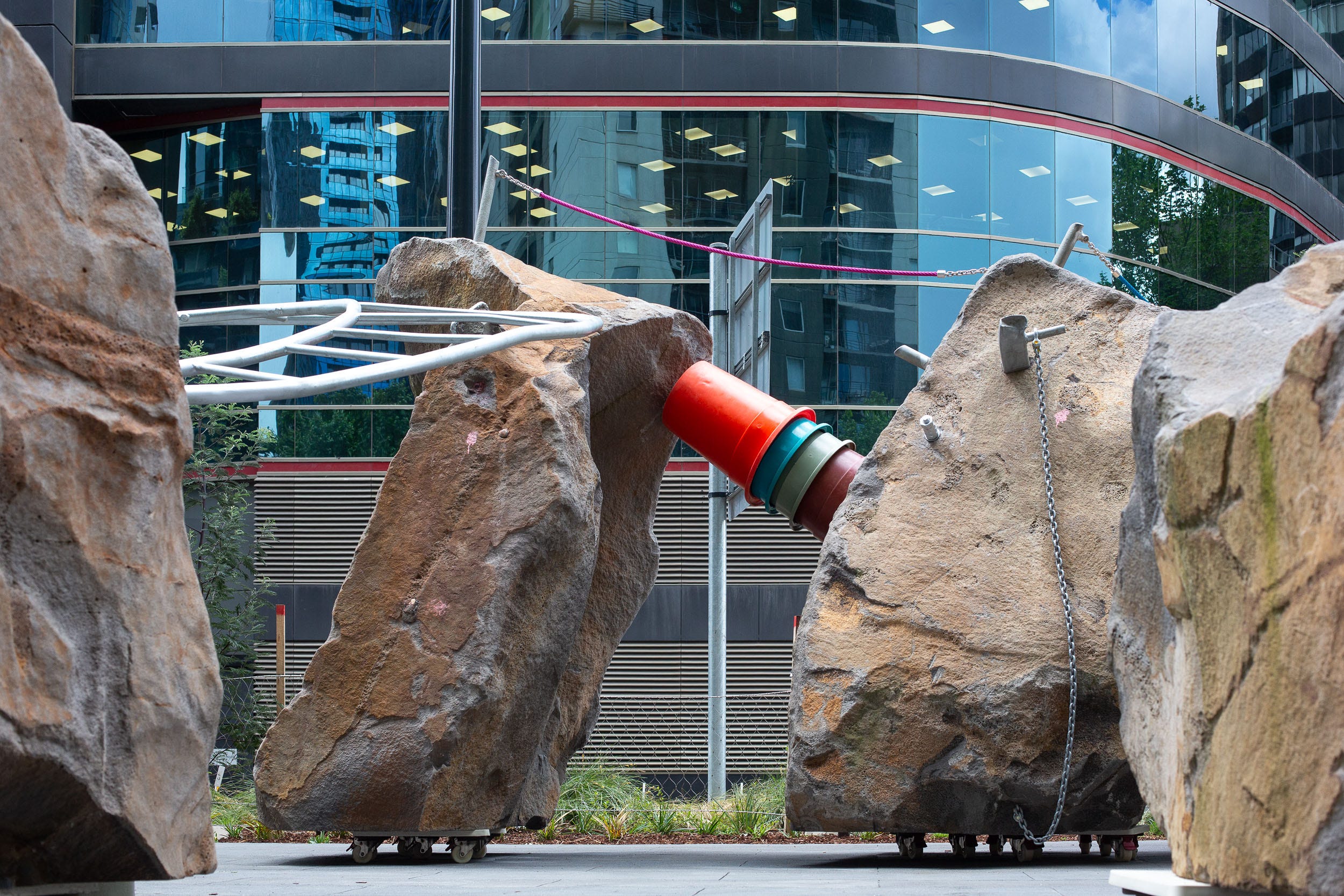
Building on levels of challenge, including some elements of overcoming fear, are vital for childhood development. It is likely one of the reasons the boulder playground on Melbourne’s Southbank is so popular with children (parents seem to remain a touch nervous, but good on those who challenge themselves to allow their kids to explore there).
It is a space that ‘looks’ dangerous, while meeting all legal safety requirements, thus challenging children in perception, if not in physical reality, which is great. Embracing risk and challenge is a rite of passage and a necessary developmental need, summed up in Tim Gill’s book by a teenager as thus: “Kids should be allowed to experiment and try things. Otherwise when they grow up they’ll make very stupid mistakes from not getting enough experience at childhood.”
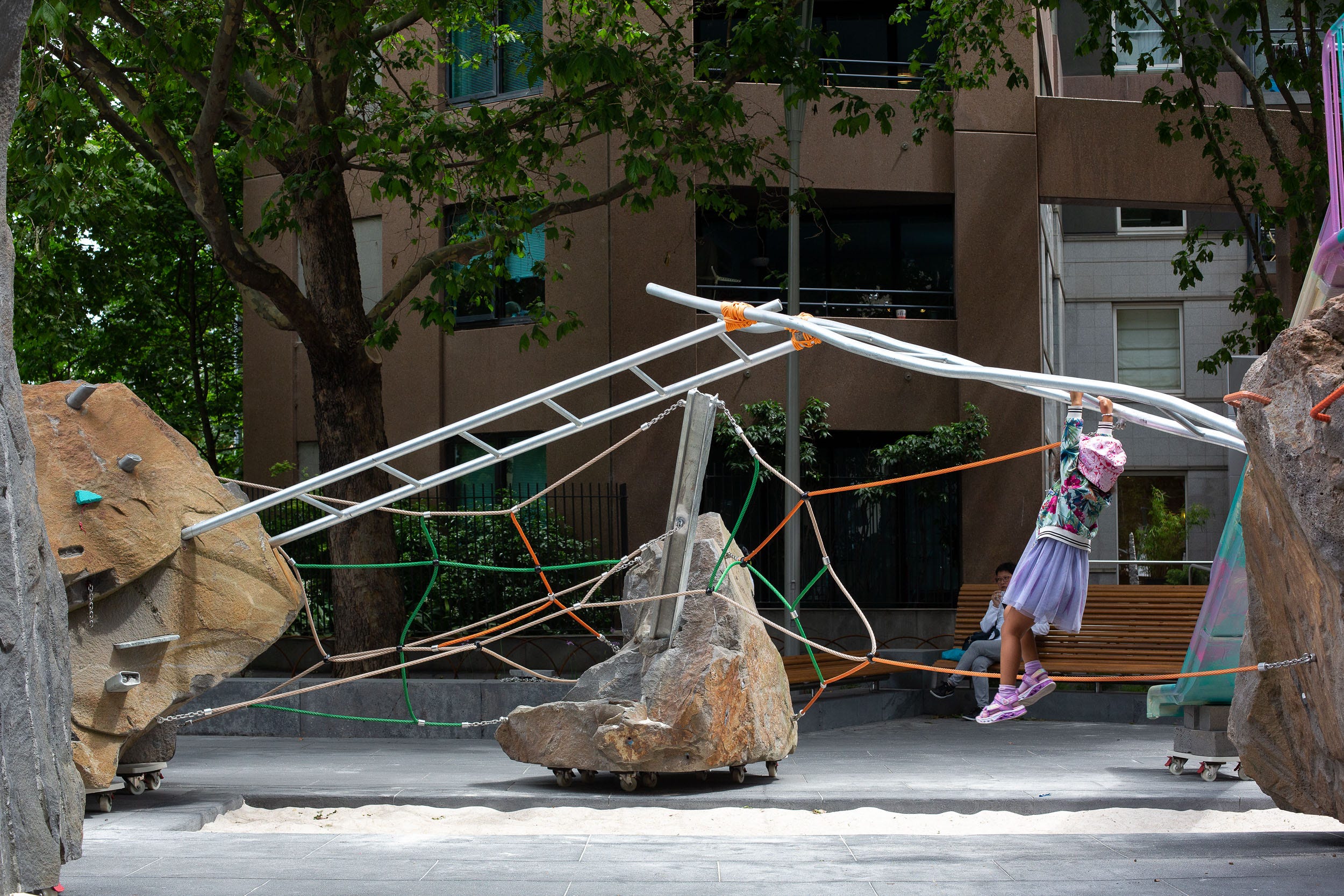
With safety restrictions and interventions such as softfall in playgrounds having made little difference to serious injuries across the world (in fact, children – and indeed their parents - may well pay less attention as they feel too ‘safe’ to accurately judge risks, a thing called risk compensation), I believe we need to act with more proportion and balance. Is the level of risk being taken by the child a ‘true’ danger, or a lesson worth understanding? Should they really be careful, or can we trust them to learn and grow and pay attention as they move confidently into the world?
Appreciate the thoughtful reflection on the importance of being able to explore boundaries and learn from that experience.